
The move by Westinghouse, which is to build six reactors in India under the Indo-US civil nuclear deal inked in 2008, has raised uncertainties over the future of the implementation of the historic pact.

Hindustan Unilever Ltd on Thursday reported a 6.9 per cent rise in consolidated profit after tax at Rs 2,556 crore in the first quarter ended June 30, 2023, riding on a gradual recovery in the FMCG industry despite operating in challenging environment. The company had posted a consolidated net profit of Rs 2,391 crore in the same quarter last fiscal, Hindustan Unilever Ltd said in a regulatory filing. Consolidated total income in the first quarter stood at Rs 15,679 crore as against Rs 14,757 crore in the corresponding period last fiscal.

After startups and Big Tech, the layoff season may have begun at the $245 billion Indian information-technology (IT) industry. Bengaluru-based IT major Wipro is looking to cut hundreds of jobs, targeting mid-level employees working onsite as the company looks to improve margins, according to a media report, citing two sources. The company has said it is aligning its business and talent to the changing market environment.

'As China's reopening euphoria fizzled out on the back of some disappointing economic data, we saw inflows coming back to India with full force in the past 3-4 months.'

Commodity investments can help you diversify your portfolio in asset classes other than equity and debt, says Dwaipayan Bose.

'We are cautious only on sub-sectors that have seen massive melt-up during the past six months.'
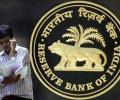
The Reserve Bank has told the International Monetary Fund (IMF) that the objective of frequent interventions in the forex market is to curb excessive volatility, dismissing the Fund's rationale for reclassifying India's exchange rate regime. The IMF, following the Article IV consultation with the Indian authorities, reclassified the status of the exchange rate regime to "stabilised arrangement" from "floating" for period between December 2022 to October 2023. India's Executive Director at IMF K V Subramanian and Senior Advisors Sanjay Kumar Hansda and Anand Singh questioned the selection period adopted by the Fund for analysis and also reclassification of the country's exchange rate regime.

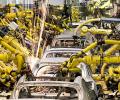
Shortages of chips will impact the car market

All six members of the Reserve Bank of India's (RBI's) monetary policy committee (MPC) expressed caution over food inflation during the December review, while two external members warned about high real interest rates as headline inflation approaches its target of 4 per cent. The central bank continued to maintain the status quo on both the repo rate and the stance in the December monetary policy. India's retail inflation in November rose to 5.5 per cent - its fastest pace in three months - due to higher food prices.

'...similar to the 2008 global financial crisis, the 2012 taper tantrum, or the 2018 midcap crash.' 'This could lead to a substantial decline in activity and revenues for the broking industry.' 'When this will happen is uncertain, but as brokers, we must be prepared for such a downturn.'

The Indian Navy has appointed the first woman commanding officer in a naval ship in sync with its philosophy of 'all roles-all ranks' for female personnel, Navy Chief Admiral R Hari Kumar said on Friday.

Titan Company on November 21, became the second Tata group firm to join Rs 3 trillion market capitalisation (market cap) club after its shares hit a new high of Rs 3,400, up nearly 2 per cent on the BSE in Tuesday's intra-day trade. At 12:28 PM; with a market cap of Rs 301,847 crore (Rs 3.02 trillion) Titan stood at number 16th position in overall market cap ranking on the BSE listed companies, the exchange data shows. Titan overtook paint company Asian Paints, which has a market cap of Rs 300,579 crore, data shows.

'Investors need to have a fairly diversified basket of funds within equities.' 'We want them to allocate to largecap funds, midcap funds and flexicap schemes.'

For long-term financial security, millennials must not only provide social security for their young families but also ensure that their financial burdens are not passed down to their families, says Casparus Kromhout.
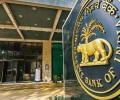
GDP growth of 7.7 per cent in the first half of this fiscal has "left sceptics gasping and woefully behind the curve", an RBI article said on Wednesday. It also stressed the buildup in the growth momentum is likely to be sustained. The article on the state of the economy published in the Reserve Bank's December Bulletin on Wednesday also said CPI-based retail inflation is expected to ease to 4.6 per cent in the first three quarters of 2024-25 from 5.6 per cent in November.

Terming the RBI action on Wednesday as a "pleasant surprise", analysts today cautioned that possibility of a rate hike in the future cannot be ruled out. Urijit Patel committee's report on monetary policy would clear the air on RBI's future stand, they added.

Madrid won only two of their seven pre-season games
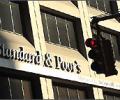
If the fiscal position of the United States deteriorates further or if the political gridlock becomes more entrenched, then that could lead to a downgrade.

Substantial gains can still be made with good policies and initiatives.

Modi attended the 20th ASEAN-India Summit in Jakarta. Secretary-General of ASEAN Dr Kao Kim Hourn also attended the summit.

CEOs expect to finish the ongoing March quarter with positive growth as the corporates get back to work in full strength.

Among the main gainers were Jio Financial Services which jumped 4.99 per cent, Tata Steel (2.09 per cent), Maruti Suzuki (1.87 per cent), M&M (1.31 per cent) and Infosys (1.19 per cent).

The partially convertible rupee closed at 61.31/32 per dollar, unchanged from its Tuesday close.

'With a solid investment programme and sustainable development strategy, India can exceed 7 per cent growth per year, or a doubling of high-quality national income within a decade.'

The stock of State Bank of India (SBI) may re-rate soon, believe analysts, if the lender manages to safeguard its net interest margin (NIM) going ahead. This, along with controlled credit costs, should aid the outlook of the stock which has been underperforming the markets for some time now. "We believe delivery of growth on guided lines, sustenance of NIMs near current levels, and controlled asset quality parameters aiding controlled credit costs should lead to strong profitability and drive re-rating of the stock," said analysts at JM Financial.

Rebalance your portfolio in case it has become overweight on equities vis-a-vis your strategic asset allocation.

'Although mid- and small-cap funds have the potential for higher growth, they come with inherent higher volatility.'

India's second largest IT services company Infosys on Thursday reported a 3.1 per cent year-on-year rise in net profit to Rs 6,215 crore for the September 2023 quarter. The earnings (before minority interest) of the Bengaluru-based company stood at Rs 6,026 crore in the year-ago period. The company - which competes in the IT services market with TCS, Wipro, HCL Technologies and others - saw its revenue rising 6.7 per cent to Rs 38,994 crore for the just-ended September quarter.

Jaishankar said the world has experienced its consequences in terms of higher costs and shortages of foodgrains and fertilizers and fuel.

AI and machine learning will only continue to grow in 2022, with a significant increase in the demand for such roles, notes Sekhar Garisa, CEO, Monster.com.

Among the Sensex firms, Bajaj Finance emerged as the biggest gainer by climbing 2.95 per cent. Tata Motors, Bajaj Finserv, IndusInd Bank, Sun Pharma, Mahindra & Mahindra, State Bank of India, Larsen & Toubro, HDFC, HDFC Bank, Maruti, Reliance Industries and Bharti Airtel were the other major winners. HCL Technologies, Axis Bank, ICICI Bank, Tech Mahindra and Titan were among the laggards.

A new era of Indian equity market outperformance compared to China "appears to be dawning", according to Morgan Stanley. The firm has upgraded India to overweight in its Asia Pacific-excluding Japan (APxJ) list, making it their most preferred market not only in the region but also in the global emerging market (GEM) pack. India now holds the top position in this category, with an overweight of 75 basis points, a significant increase from nil previously.

His government's decision to host G-20 events across the country is an investment in capacity-building among people, cities and institutions, Prime Minister Narendra Modi has said, as he took a jibe at previous governments asserting they lacked confidence in people's abilities to hold mega events outside the capital, in smaller places.
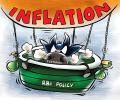
The RBI's Monetary Policy Committee brainstormed the impact of any future shocks on the inflation trajectory and stressed monitoring the cumulative effect of monetary policy actions over the past one year, which is still unfolding, revealed minutes of the rate-setting panel released on Thursday. The minutes of the meeting of the Monetary Policy Committee (MPC), headed by Reserve Bank Governor Shaktikanta Das, also indicated it would be premature to declare an end to the monetary tightening cycle, which started in May 2022 to check high inflation following the outbreak of the Russia-Ukraine war. The central bank, which effected six back-to-back hikes in the key short-term lending rate (repo) since May 2022 to check high inflation, decided to take a pause early this month.

Navy chief Admiral R Hari Kumar on Monday flagged concerns over growing geo-political power play in the Indo-Pacific, and noted that the US-China rivalry in the region is likely to be a "marathon".

One could argue that India is not troubled in the same way as China is by a declining population and structural problems in real estate/construction and finance. But India has serious trade and fiscal imbalances, and excessive dependence on capital expenditure by the government, points out T N Ninan.

The watershed 2014 Indian election has thrown a decisive mandate after 30 years of coalition-based governments.

'India is the sixth-largest market for the Kia Corporation, and contributes 8 to 9 per cent to our global sales.' 'We are eyeing 10 per cent market share over the next few years depending on customer demand and new product innovations.'

Automobile retail sales in India rose 14 per cent in January on the back of robust registrations across passenger vehicles, two-wheelers and tractors, dealers' body Federation of Automobile Dealers Associations said on Monday. Total sales across categories last month rose to 18,26,669 units, as compared to 16,08,505 units in January 2022. Passenger vehicle registrations rose to 340,220 units last month, an increase of 22 per cent as compared to 279,050 units in the year-ago period.
286 dealers closed down in 18 months, 32,000 jobs impacted. Maharashtra leads with 84 closures, followed by Tamil Nadu and Delhi. The worst-hit is the passenger car segment.
